The QR menu for Chinese, Japanese and Indian restaurants

Lantern for Chinese kitchens, Washi for Japanese and sushi bars, Saffron for Indian restaurants. Made for long menus that need to stay easy to read.

  • Lantern
  • Washi
  • Saffron
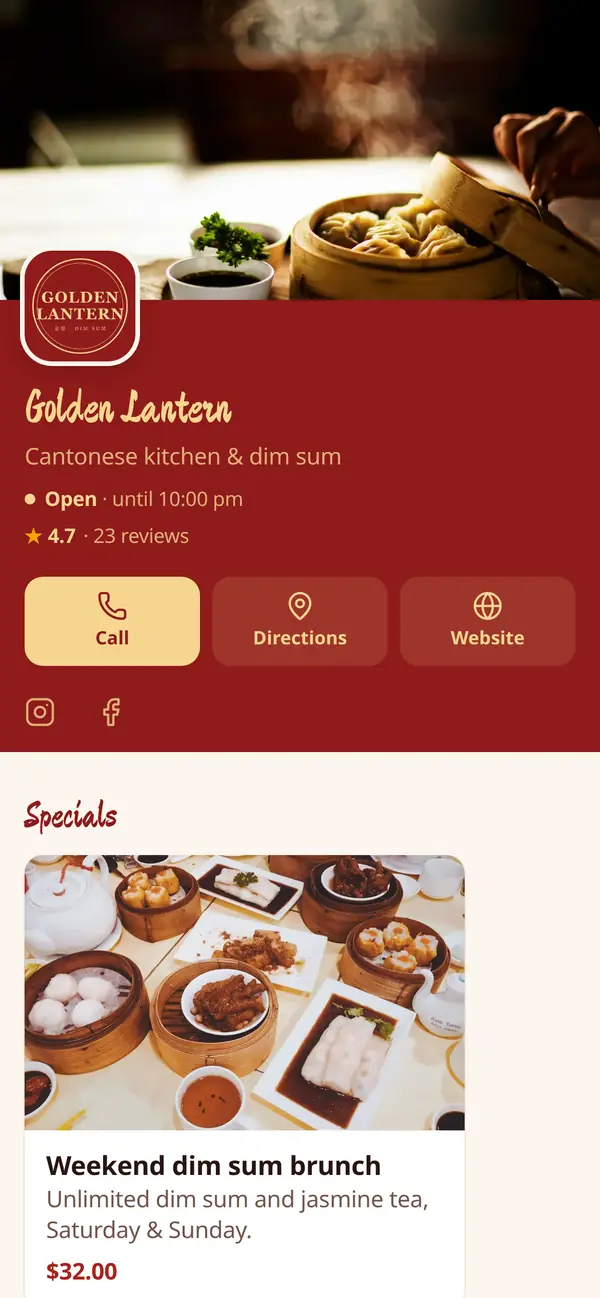
Golden Lantern: Cantonese kitchen & dim sum
Golden Lantern · Lantern

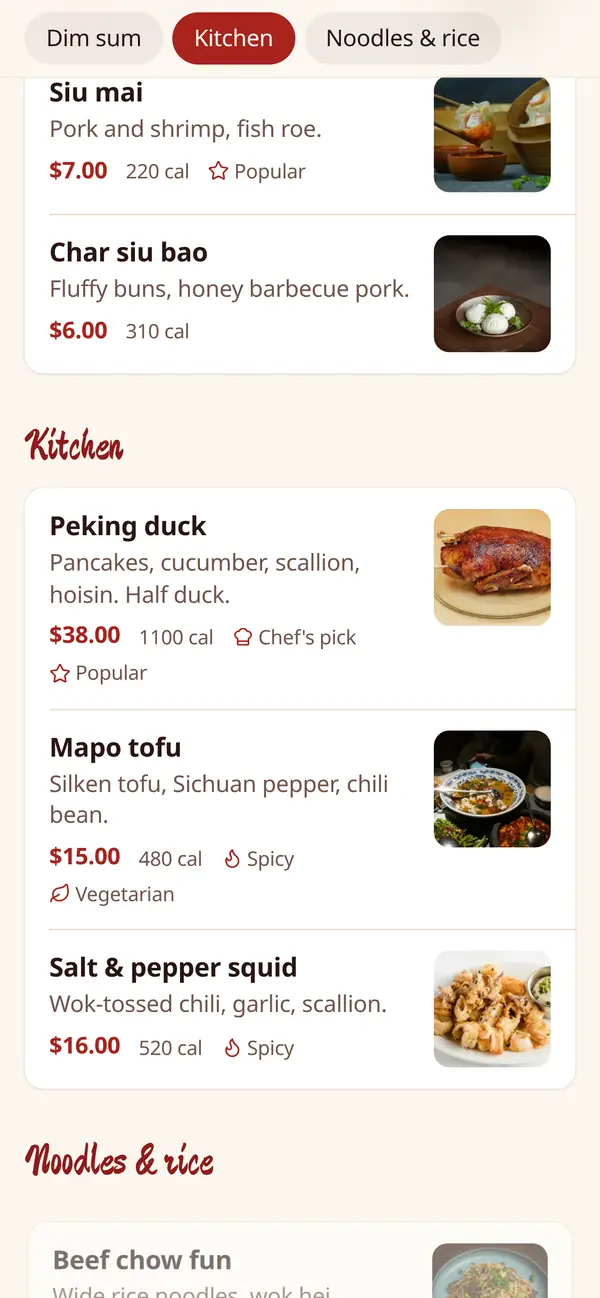
Asian restaurant menus are often long, with dozens of dishes, combos and spice levels. spotmymenu keeps them easy to browse on a phone: a sticky section bar to jump between Appetizers, Noodles, Rolls or Curries, clear Spicy and Vegetarian labels, and a photo for every dish so guests know exactly what they're ordering.

  • Three dedicated themes

    Lantern (Chinese), Washi (Japanese) and Saffron (Indian), in light and dark mode.

  • Long menus, easy to browse

    Tap a section to jump straight to it. The bar highlights where you are.

  • Spice and diet labels

    Spicy, Vegan, Vegetarian and Gluten free, clear at a glance.

  • Combos and add-ons

    Add a side of rice, choose a spice level or upgrade to a combo, each with its own price.

Asian restaurants · Menu examples

Menus with their own personality

Same platform, completely different menus. Pick a restaurant to see its theme, colors and the design choices behind it.

3 examples · 3 themes · 3 color schemes

Golden Lantern, Lantern theme

Golden Lantern

“Cantonese kitchen & dim sum”

Theme
Lantern
Layout
List: compact, great for long menus
Accent
Theme default

Why it works

  • Dim sum · Kitchen · Noodles & rice: a long menu split by how it's cooked.
  • The list layout with small photos keeps dozens of dishes easy to scan.
  • The Weekend dim sum brunch (unlimited dim sum and jasmine tea) is the headline special.

Themes aren't tied to a cuisine

Copper Kettle Brewing runs on the BBQ Smokehouse theme. Morning Ritual Café uses the fine-dining Ivory theme. Hickory Hollow smokes brisket on Modern. Pick the look that fits your concept, then make it yours with an accent color.

Example restaurants are fictional. The menus are real spotmymenu menus.

Best practices

Menu design tips for asian restaurants

  1. 01

    Split long menus by cooking style

    Dim sum, kitchen, noodles; nigiri, rolls, warm; tandoor, curries, breads. The sticky section bar makes jumping easy.

  2. 02

    Say it once with section notes

    “Served with basmati rice” under Curries beats repeating it in every description.

  3. 03

    Label spice and diet clearly

    Spicy, Vegan, Vegetarian and Gluten free help guests order confidently, especially from long menus.

  4. 04

    Explain dishes in plain words

    “Silken tofu, Sichuan pepper, chili bean” tells a first-timer exactly what mapo tofu is.

  5. 05

    Include pieces and portions

    Pieces per order, and 14 pieces in the omakase. Portion details set expectations and justify prices.

  6. 06

    Make set menus the easy choice

    Thali, omakase, dim sum brunch: one price, no decisions, and a great first visit.

A menu structure that works

Start here and adapt. Short sections with clear names make the sticky section bar easy to use.

  1. 1Starters
  2. 2Dim sum / Nigiri / Tandoor
  3. 3Mains / Curries
  4. 4Noodles & rice
  5. 5Breads & sides
  6. 6Drinks

Specials ideas

Put these at the top of your menu and schedule them to appear on the right days.

  • Weekend dim sum brunch
  • Omakase
  • Thali lunch
  • Bento lunch set
  • Chef's seasonal roll

FAQ

Our menu has 100+ items. Will it be easy to use?

Yes. Sections, a sticky section bar and tap-to-open dish details keep long menus fast to navigate. You can also hide seasonal items without deleting them.

Can I show spice levels?

Use the Spicy label on dishes, and add-ons for guests to pick a spice level.

Can I add a second language?

Menus support English and Spanish, and guests switch between them with one tap.

Your new menu could be live tonight.

7 days free. Set up in minutes. Cancel anytime.

Start your free trial

7 days free · then $8.99/mo

Start free